
Crafting seamless DJ shifts through advanced loop production involves precise beat and key alignment, using pitch faders for BPM synchronization and harmonic compatibility techniques, such as the Camelot Wheel. Key modulation can shift moods, while waveform analysis and musical phrase matching guarantee perfect loop placements. Manage loop lengths for dynamic builds, adjust EQ to prevent frequency masking, and master effects like reverb for enriched soundscapes. Practice with timing drills and visual cues to perfect your shifts. These techniques will enhance your skill set and boost your live sets considerably. Learn more to master these essential techniques.
Key Takeaways
- Align loop points with musical phrases to ensure smooth transitions and maintain track flow.
- Use pitch faders to synchronize BPM and maintain consistent energy levels across tracks.
- Apply EQ adjustments to prevent frequency masking and ensure clarity in layered soundscapes.
- Utilize visual waveform analysis for precise loop placement and seamless integration.
- Experiment with loop lengths and live adjustments to match audience energy and track dynamics.
Beat and Key Alignment
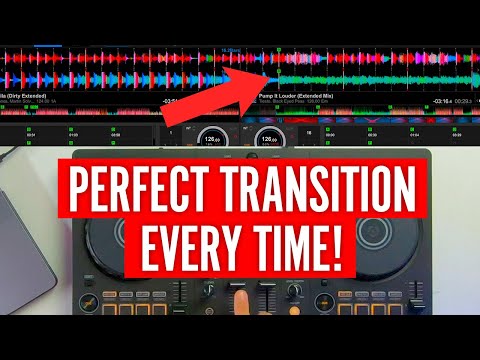
Achieving precise beat and key alignment is a fundamental skill for any DJ aiming to craft seamless shifts. Beat synchronization is paramount, as it guarantees that the rhythmic elements of two tracks align perfectly, preventing any audible disruptions. DJs often employ pitch faders to adjust the BPM (beats per minute) of tracks, thereby synchronizing tempos. This is essential for maintaining a consistent energy level throughout a set, as mismatched tempos can disrupt the flow and engagement of the audience.
Furthermore, understanding song structure can greatly enhance mix cohesion and emotional engagement, allowing DJs to create a compelling narrative arc within their sets.
In addition to beat synchronization, harmonic compatibility plays an important role in seamless shifts. Utilizing tools such as the Camelot Wheel allows DJs to identify keys that are musically compatible, facilitating harmonic mixing. This technique guarantees that the harmonic structure of the combined tracks remains cohesive, preventing discordant clashes that could detract from the overall experience.
Understanding the interplay between major and minor keys further enhances this process, enabling DJs to execute sophisticated key modulation techniques that creatively shift mood and energy.
Mastering these elements allows DJs to refine loop precision, guaranteeing that loops and tracks blend seamlessly. This technical prowess keeps the audience engaged, delivering a polished and immersive auditory experience.
Loop Point Setting
Setting precise loop points is vital for creating fluid shifts that maintain the energy and coherence of a DJ set. Mastering loop point techniques involves utilizing visual waveforms in DJ software to accurately identify ideal loop placement. This process requires a keen eye for rhythmic patterns and peaks to guarantee a seamless blend between tracks.
Effective loop point setting also hinges on understanding the importance of beat matching and how it can enhance the overall fluidity of shifts.
Key Loop Point Techniques:
- Visual Waveform Analysis: Employing visual waveforms allows DJs to pinpoint exact moments for setting loop points. Focus on rhythmic patterns and peaks to guarantee the loop complements the track’s natural flow.
- Live Adjustments: Adapt loop points in real-time based on audience energy and track dynamics. This dynamic approach guarantees loops are engaging and maintain the set’s momentum.
- Match Musical Phrases: Guarantee loop lengths align with musical phrases such as verses or choruses. This alignment promotes smoother integration and maintains coherence between evolving tracks.
Short loops, typically ranging from 1 to 4 bars, are effective for enhancing energy and maintaining momentum. Conversely, longer loops, around 8 bars or more, facilitate gradual builds and shifts.
Experimentation with various loop lengths and settings is significant to finding the perfect balance that resonates with the crowd, ultimately elevating the overall performance quality.
Loop Length Management

Effective loop length management is vital for maintaining the energy and coherence of a DJ set. Loop timing should align with the musical phrases of the tracks, typically ranging from 4 to 16 bars. This synchronization guarantees seamless integration and fluid shifts.
Shorter loops, spanning 1-2 bars, can inject immediate energy and urgency into a set, capturing the audience’s attention and driving the dance floor’s momentum. Conversely, longer loops of 8-16 bars facilitate gradual builds and tension release, essential for maintaining a dynamic flow.
Utilizing visual waveforms in DJ software is instrumental in identifying rhythmic patterns and peaks, aiding in pinpointing the best loop points during live performances. This visual aid enhances precision in loop length management, vital for maintaining the set’s rhythm and coherence.
Real-time adjustment of loop lengths allows DJs to respond dynamically to the crowd’s energy, enhancing audience engagement through adaptive performance. Additionally, MIDI mapping and advanced automation can provide detailed control over loop lengths, enabling intricate and responsive performance adjustments.
Experimenting with loop variation, by altering the loop lengths, can create unique soundscapes and unexpected shifts. This technique adds depth and intrigue to the set, guaranteeing the audience remains captivated.
Mastery of loop length management is therefore pivotal for crafting seamless, engaging DJ shifts.
EQ and Sound Layering
In the domain of DJ performance, EQ and sound layering stand as fundamental techniques for achieving a balanced and immersive auditory experience. Adjusting EQ settings is essential to prevent frequency masking when layering sounds. By lowering the outgoing track’s bass, one can maintain clarity and energy in the mix, guaranteeing that the incoming track’s frequencies occupy the necessary spectrum space without clashing.
Additionally, understanding frequency ranges is vital for achieving clarity and impact in your mixes. By mastering this, DJs can create a more refined auditory blend.
To refine the auditory blend, consider employing high-pass filters to clean up the mid and high frequencies. This technique allows the layered tracks to integrate seamlessly without significant overlapping, preserving the tonal balance of the mix. Experimenting with different EQ curves can further enhance the sonic character, tailoring the sound to fit the unique qualities of each track involved.
Proper sound layering involves careful selection and EQ adjustments of compatible elements to guarantee a cohesive auditory experience. Balancing the frequency spectrum is essential; here are key steps:
- Bass Management: Lower the outgoing track’s bass to prevent muddiness and maintain low-end clarity.
- High-Pass Filtering: Utilize high-pass filters to clear mid and high frequencies, avoiding frequency masking.
- EQ Curve Experimentation: Adjust EQ curves to enhance the mix’s tonal balance, ensuring each frequency range shines through.
These techniques are pivotal in crafting loops that lift DJ shifts to a professional level.
Transition Techniques
Shift techniques in DJing hinge on meticulous loop segmentation strategies, where isolating and extending track segments can create seamless overlays and build anticipation.
Dynamic loop integration, such as live activation and length adjustments, allows DJs to maintain control over the set’s flow and energy.
Additionally, layering contrasting rhythmic patterns, like polyrhythmic looping, enhances the complexity and engagement of shifts, enchanting the audience.
Mastery of effects, such as reverb and filters, can further enrich the auditory experience, ensuring a smooth and immersive shift between tracks.
Loop Segmentation Strategies
Segmenting loops by identifying key phrases or rhythmic patterns within a track is essential for creating seamless DJ changes. This technique allows DJs to pinpoint ideal loop points, enhancing the fluidity and coherence of their mixes.
Leveraging visual waveforms in DJ software is vital for precise loop segmentation, as it helps locate natural peaks and troughs, ensuring smoother shifts.
The loop segmentation benefits are multifaceted, enabling DJs to craft shifts that maintain the energy and momentum of the set. By experimenting with varying loop lengths, DJs can match the musical phrases and energy levels of both tracks, facilitating either short, energetic bursts or longer, suspenseful builds.
Creative loop applications involve incorporating polyrhythmic elements to layer contrasting rhythmic patterns within loops. This method creates complex, evolving soundscapes that captivate the audience, maintaining engagement throughout shifts.
Here are three key strategies to enhance loop segmentation:
- Identify Key Phrases: Pinpoint sections of the track with distinct musical phrases or rhythmic patterns to use as entry and exit points.
- Use Visual Waveforms: Utilize software waveforms to accurately locate loop points, aligning with the track’s natural dynamics.
- Test Loop Segments Live: Regularly practice setting and adjusting loops during live sets to gauge crowd response and refine precision.
Dynamic Loop Integration
While loop segmentation lays the groundwork for pinpoint precision in DJ sets, dynamic loop integration enhances this foundation into a sophisticated performance technique. By creating dynamic loops that complement and uplift the main tracks, DJs can achieve seamless shifts while maintaining the energy and flow of their set. Loop length variation is essential for this; shorter loops inject high-energy moments, while longer loops build suspense during shifts.
Dynamic loop integration techniques include loop cutting and layering, ensuring loops meld smoothly into existing tracks without disrupting the mix. Experimenting with polyrhythmic looping, combining diverse time signatures, can lead to complex, engaging shifts that captivate the audience. Live loop manipulation—adjusting loop parameters such as timing and effects in real-time—enables DJs to react to the crowd’s energy, sustaining a dynamic performance.
| Technique | Purpose | Audience Impact |
|---|---|---|
| Loop Cutting | Smooth integration | Maintains flow and cohesion |
| Loop Length Variation | Energy modulation | Enhances suspense or excitement |
| Polyrhythmic Layering | Complex shifts | Captivates and engages audience |
| Live Loop Manipulation | Real-time adjustments | Responds to and amplifies crowd energy |
Creative loop inspiration and audience engagement strategies are pivotal in mastering dynamic loop integration, transforming a set from routine to extraordinary.
Rhythmic Pattern Layering
Rhythmic pattern layering frequently serves as a cornerstone in advanced DJ shift techniques, combining different time signatures and tempos to forge a multi-dimensional auditory experience. This method enhances sets by integrating polyrhythmic experimentation, such as blending a 4/4 beat with a 3/4 rhythm, which creates intricate textures that captivate the audience during shifts.
Key considerations for effective rhythmic pattern layering include:
- Polyrhythmic Experimentation: By merging contrasting time signatures, DJs can craft complex rhythmic tapestries that add depth and interest. For example, layering a standard 4/4 house beat with a 3/4 percussive loop can introduce rhythmic tension that heightens the shift.
- Frequency Separation: Ensuring that each rhythm occupies its own frequency range is vital. This prevents frequency clashes that can muddy the mix. Utilizing EQ adjustments and panning techniques helps in maintaining clarity and preserves the integrity of each layer.
- Loop Length and Placement: Experimenting with the length and placement of loops can build anticipation and tension, making shifts feel more organic. Properly timed loops can transform simple transitions into memorable highlights that resonate with the audience.
Precision Practice
To master the art of DJ shifts, precision practice is essential for achieving impeccable timing and synchronization. Regular engagement in timing drills fosters timing consistency, allowing DJs to develop a robust sense of rhythm and beat alignment. Utilizing metronome usage during practice sessions greatly enhances synchronization skills, enabling DJs to match loops seamlessly with the tempo of incoming tracks.
Visual cues, particularly through waveform observation, are vital for timing when initiating or concluding loops, guaranteeing smooth integration into a live mix. Beat counting techniques further support synchronization between loops and tracks, aiding in maintaining the flow and energy of the performance. Engaging in timing exercises that challenge loop placement and duration cultivates an instinctive performance, empowering DJs to adapt swiftly to the crowd’s vibe.
| Practice Technique | Benefits | Implementation Tips |
|---|---|---|
| Timing Drills | Enhances rhythm | Practice with varied BPMs |
| Metronome Usage | Improves synchronization | Set metronome to track BPM |
| Visual Cues | Aids loop timing | Observe waveforms for precise loop points |
| Beat Counting | Maintains flow | Count beats to guarantee alignment |
| Instinctive Performance | Adapts to crowd vibe | Practice under varied conditions |
Precision practice, through these techniques, guarantees DJs can craft loops that seamlessly integrate into their sets, achieving professional-grade shifts.
Frequently Asked Questions
How to Make Smooth DJ Transitions?
To make smooth DJ shifts, utilize precise beatmatching and harmonic mixing. Employ loop techniques at rhythmic peaks and adjust EQ settings to balance energy. Adapt shift strategies based on crowd reactions to maintain an engaging performance.
What Do DJS Use to Transition Songs?
DJs use beatmatching strategies to synchronize tempos, harmonic mixing for key compatibility, EQ adjustments for frequency balance, and loop techniques to extend sections, ensuring seamless shifts between tracks while maintaining the set’s energy and flow.
How to Mix Songs Seamlessly?
To mix songs seamlessly, DJs employ beatmatching and precise tempo adjustments to synchronize track BPMs. Harmonic mixing and EQ adjustments further refine shifts, while crowd reading guarantees the chosen tracks maintain energy and engagement throughout the set.
What Is a 4 Beat Loop?
A 4 beat loop is a repeating audio segment of four beats, essential for maintaining loop length and consistent beat structure. It is integral in dance music for creating smooth changes, extending breakdowns, and enhancing overall set dynamics.
Conclusion
Mastering advanced loop production for seamless DJ shifts necessitates proficiency in beat and key alignment, precise loop point setting, and meticulous loop length management. Incorporating sophisticated EQ and sound layering techniques, alongside strategic shift methods, guarantees fluidity and cohesion in live performances. Continuous precision practice is imperative for achieving the technical dexterity required. The amalgamation of these elements culminates in the creation of professionally polished loops that enhance the auditory experience and maintain crowd engagement.