
Incorporating drum machines into DJ sets greatly enhances live performances by adding real-time, dynamic elements to the music. Utilizing devices like the Roland TR-8S and Pioneer DJ DJS-1000 enables DJs to manipulate beats and samples seamlessly, ensuring a cohesive auditory experience through MIDI clock synchronization. Advanced techniques such as EQ mixing and real-time looping boost the performance, while well-organized sample banks optimize creativity and fluidity. By managing cable setups meticulously and preparing for environmental variables, DJs can further refine their craft, creating electrifying sets. Explore these methods to transform your DJ performances with unparalleled precision and creativity.
Key Takeaways
- Use MIDI clock synchronization to maintain consistent tempo across drum machines and DJ setups.
- Integrate drum machines for real-time manipulation of beats, enhancing performance dynamics.
- Organize and pre-load samples to focus on creative expression during live sets.
- Employ EQ mixing techniques to achieve a balanced sound when blending drum machines with other elements.
- Practice transitions and layering to ensure smooth integration of live elements into DJ performances.
The Evolution of DJ Technology

The evolution of DJ technology has been a transformative journey, beginning in the 1970s and 1980s with pioneering figures like Kool Herc and Grandmaster Theodore. These DJ pioneers revolutionized party culture by utilizing turntable techniques to create breakbeats, laying the foundation for the genre.
By manipulating records, they introduced performance dynamics that captivated audiences, giving birth to hip-hop and other electronic music styles.
As technology advanced, the integration of electronic instruments became pivotal. The development of MIDI synchronization enabled seamless connectivity between turntables and other electronic instruments, enhancing the complexity and fluidity of DJ performances.
This allowed DJs to layer sounds and maintain tempo consistency in their sets, thereby pushing creative boundaries. Modern DJ software, such as Ableton Live, empowers DJs with real-time manipulation of loops and samples, bridging the gap between traditional DJing and live music production.
The advent of modern software, such as Ableton Live, further redefined DJing by allowing real-time manipulation of loops and samples. This software bridged the gap between traditional DJing and live music production, offering unprecedented creative enhancements.
Portable devices like the Roland SPD-SX and Pioneer DJ DJS-1000 have also made it feasible for DJs to incorporate live elements into their performances without sacrificing quality.
These advancements collectively underscore the evolution of DJ technology, emphasizing innovation in performance dynamics and creative expression.
Integrating Drum Machines
Integrating drum machines into DJ sets fundamentally improves the performance dynamic, enabling real-time manipulation of beats and samples that captivate and engage audiences. The drum machine benefits are manifold, starting with the seamless synchronization possible through MIDI clock synchronization. This guarantees a consistent tempo across all devices, which is essential for maintaining performance dynamics and overall cohesiveness.
Additionally, mastering EQ mixing techniques can further refine the integration of drum machines, providing a balanced and immersive sound experience.
Advanced drum machines, such as the Roland TR-8S and Pioneer DJ DJS-1000, are equipped with intuitive interfaces and robust build quality, specifically designed for live performance reliability. These machines come with built-in looping and FX capabilities, allowing DJs to craft intricate rhythmic patterns and textures on the fly. This real-time creative control raises the performance, moving beyond mere playback of pre-recorded tracks.
Preparation is key to leveraging the full potential of drum machines in a live setting. Organizing samples in advance minimizes clutter and allows the DJ to focus on creativity and improvisation during the performance.
Techniques for Live Enhancement
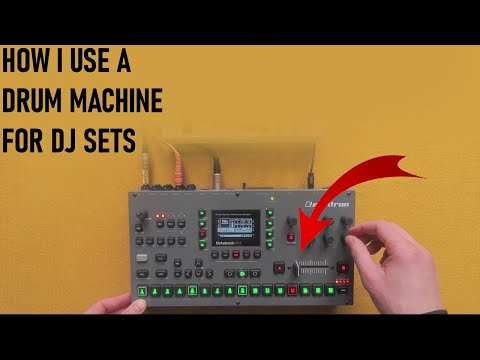
Mastery of live enhancement techniques transforms a DJ set from a passive experience to an electrifying performance. Integrating drum machines allows for live remixing and beat layering, elevating the dynamics of the set. Pioneers like Derrick Carter and Frankie Knuckles have demonstrated the power of real-time manipulation of beats and rhythms, showcasing how drum machines can enrich a performance.
One effective technique is utilizing MIDI clock synchronization. This guarantees seamless tempo matching between the drum machine and DJ software, enabling fluid shifts and cohesive beat layering. Furthermore, real-time looping capabilities in modern drum machines facilitate the creation of repetitive patterns, allowing DJs to extend sections and maintain audience engagement.
| Technique | Benefit |
|---|---|
| MIDI Clock Sync | Guarantees seamless tempo matching for cohesive sets |
| Real-time Looping | Extends sections and enhances audience engagement |
| One-shot Sampling | Adds richness and precision through clock-sync features |
Additionally, the use of samplers in conjunction with drum machines allows DJs to add one-shots and drum sounds live, enriching the overall soundscape. By preparing samples in advance, DJs can improve the flow of their set, allowing for more creative expression during live remixing and guaranteeing that the performance remains engaging and dynamic.
Sample Management Tips
Effective sample management is essential for any DJ looking to boost their live performances. Organizing your sample banks by genre and style is a fundamental step in achieving this. This approach facilitates quick access to appropriate sounds during live performance, ensuring seamless integration that aligns with the vibe of the set.
Additionally, familiarizing yourself with different mixing styles can further enhance your ability to blend samples smoothly. A well-structured sample organization system is paramount for maintaining flow and spontaneity.
Utilizing looping features on your drum machine can greatly improve the dynamics and energy of your performance. By creating repetitive patterns, you can build tension and manage shifts more effectively between tracks. Prepares and loads your samples in advance to avoid last-minute clutter, allowing you to focus on live manipulation rather than frantically searching for sounds mid-performance.
Incorporating real-time sample manipulation is another technique to uplift your set. This can include altering pitch, adding effects, or layering additional sounds, providing a unique and engaging experience for the audience.
Regularly practicing your sample management techniques will make you more familiar with your setup, enabling you to respond adeptly to the audience’s energy and improving the overall live performance quality.
Overcoming Integration Challenges

Building on effective sample management, addressing integration challenges is another vital aspect for DJs incorporating drum machines into their sets. One primary hurdle is achieving flawless MIDI synchronization. Confirming that all devices are tempo-aligned is essential; otherwise, sync issues can arise during live performances.
Drum machines like the Roland TR-8 are designed to sync with various DJ setups, such as CDJs and Traktor, but they often require additional auxiliary sends for precise audio routing during live sampling. Additionally, it is important to match connections correctly to guarantee proper signal flow without degradation, which can be a common issue in complex setups.
To mitigate these challenges, consider the following strategies:
- Optimize Cable Management: The complexity of connecting multiple audio cables can lead to clutter and confusion. Streamlining your setup by using color-coded cables or cable ties can greatly reduce setup time and potential errors.
- Practice Transitions and Layering: Balancing live drum machine elements with pre-recorded tracks can impact performance fluidity. Regular practice of transitions and layering techniques guarantees smoother integration, enhancing your overall performance.
- Prepare for Environmental Factors: User experiences indicate unexpected challenges such as equipment disconnections or club setting issues. Having backup plans and redundant connections can safeguard against these disruptions.
Frequently Asked Questions
Do DJS Use Drum Machines?
Yes, DJs use drum machines extensively for their drum machine benefits, enhancing live performance techniques. They enable real-time beat manipulation, loop and sample control, adding dynamic elements such as hi-hats and claps, thereby enriching the overall performance.
How to Connect Drum Machine to Dj Mixer?
To achieve seamless drum machine integration with your DJ mixer, use a 1/4-inch TRS cable to connect the drum machine output to the mixer’s input channel. Guarantee proper audio routing and sync tempos using MIDI cables for peak live performance.
What Is the Difference Between a DJ Set and a Live Performance?
A DJ set focuses on beatmatching and shifts using DJ techniques with pre-recorded tracks, while a live performance emphasizes live improvisation and real-time sound manipulation, often incorporating instruments like drum machines for a dynamic, adaptive musical experience.
How to Increase Energy in DJ Set?
To increase energy in a DJ set, employ energy techniques such as live looping and EQ adjustments. Enhance crowd interaction by visibly playing drum pads and triggering samples, ensuring seamless rhythmic integration to maintain audience engagement and excitement.
Conclusion
The integration of drum machines into DJ sets represents a significant advancement in live performance technology. By employing sophisticated techniques and meticulous sample management, DJs can enhance their sets with dynamic, live elements. Despite the challenges of synchronization and equipment compatibility, the creative possibilities afforded by drum machines offer substantial benefits. This fusion of technology and artistry not only boosts the auditory experience but also pushes the boundaries of modern DJ performances.